

Jakarta, teckknow.com – Prompt Engineering refers to the practice of designing, structuring, and refining instructions given to artificial intelligence systems in order to produce more accurate, useful, and context-appropriate outputs. In the context of AI language models, prompt engineering is the method users employ to guide how a model interprets a task, what information it prioritizes, what format it follows, and how deeply it reasons through a request. As language models become more widely used across business, education, research, software development, and creative work, the quality of the prompt increasingly determines the quality of the result.
What makes Prompt Engineering especially important is that these models do not simply respond to topics. They respond to framing, constraints, examples, sequence, specificity, and context. A vague prompt may produce a vague answer, while a clear and structured prompt can dramatically improve relevance and reliability. In that sense, prompt engineering is not a decorative skill layered on top of AI use. It is one of the main ways humans translate intent into machine-readable instruction. If the model is powerful, the prompt is the steering wheel. And yes, a very expensive car still goes into a hedge if the steering is sloppy.
What Prompt Engineering Means
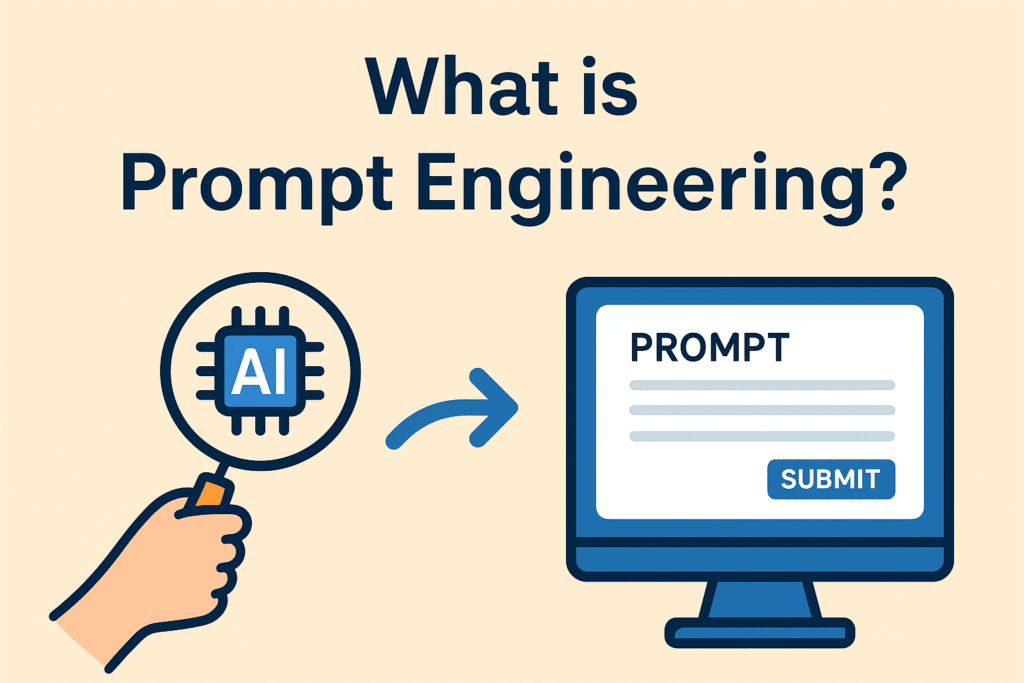

At its core, prompt engineering is the process of creating effective inputs that help an AI model generate better outputs.
Common features of prompt engineering include:
- Clear task definition
- Context setting
- Output format instructions
- Constraint specification
- Tone and audience guidance
- Use of examples
- Iterative refinement
- Error reduction through precision
These features explain why prompt quality strongly influences model performance.
Why Prompt Engineering Matters
This matters because AI language models are highly responsive to how a request is written.
Improves Accuracy
Well-structured prompts reduce ambiguity and help the model focus on the intended task.
Increases Relevance
Prompt engineering helps align responses with the user’s goals, domain, and audience.
Enhances Consistency
Templates and instruction patterns improve repeatability across tasks.
Supports Efficiency
Better prompts reduce the need for multiple corrections and retries.
This is why Prompt Engineering has become a critical skill in effective AI use.
Core Elements of Effective Prompt Engineering
Several elements shape whether a prompt produces high-quality results.
Clarity
The task should be stated directly so the model knows what it is being asked to do.
Context
Relevant background information helps the model interpret the request more accurately.
Constraints
Limits on length, format, scope, or tone help guide the response.
Examples
Sample inputs or outputs can anchor the model’s behavior and reduce misunderstanding.
Iteration
Prompt engineering often involves testing and refining prompts based on output quality.
Together, these elements create stronger instructions and better model behavior.
Prompt Engineering Overview Table
Below is a concise summary of the main dimensions of Prompt Engineering.
| Element | Main Role | Why It Matters |
|---|---|---|
| Clarity | Defines the task clearly | Reduces ambiguity |
| Context | Supplies background information | Improves relevance and accuracy |
| Constraints | Limits how the model responds | Supports control and formatting |
| Examples | Demonstrates expectations | Guides output style and structure |
| Iteration | Refines prompt quality over time | Improves reliability and usefulness |
Together, these dimensions show that prompt engineering is both practical and strategic.
Common Prompt Engineering Techniques
Different techniques are used depending on the complexity of the task.
Direct Instruction
The user gives a clear command with minimal ambiguity.
Role Framing
The prompt assigns the model a role or perspective to shape tone and approach.
Step-Based Guidance
The model is instructed to handle the task in a defined sequence.
Few-Shot Prompting
Examples are provided to show the desired pattern of output.
Output Formatting
The prompt specifies whether the answer should be a list, paragraph, table, code block, or another structure.
These techniques help users gain more control over AI-generated responses.
Challenges in Prompt Engineering
Although highly useful, prompt engineering also has limitations.
Model Variability
Different models may respond differently to the same prompt.
Hidden Ambiguity
Prompts may appear clear to the user while remaining open to multiple interpretations.
Overconstraining
Too many instructions can make outputs rigid or reduce usefulness.
Domain Sensitivity
Specialized topics may require highly specific context to achieve good results.
Dependence on User Skill
Prompt effectiveness often depends on how well the user understands the task and the model.
These challenges show that prompt engineering is a skill developed through practice.
Why Prompt Engineering Continues to Matter
Prompt Engineering continues to matter because AI language models are increasingly embedded in professional workflows, and the gap between mediocre and excellent output often begins at the instruction level. As models become more capable, users need better methods for directing those capabilities responsibly and efficiently. Prompt engineering helps bridge that gap by making communication with AI more intentional, structured, and outcome-focused. It is not just about getting an answer. It is about getting the right kind of answer in the right form for the right purpose. Good prompts save time, reduce confusion, and spare everyone from reading three paragraphs that confidently answer the wrong question.
It continues to matter because prompt engineering helps:
- Improve output quality
- Increase task precision
- Reduce ambiguity in instructions
- Support repeatable workflows
- Maximize the practical value of AI systems
This is why Prompt Engineering remains a foundational skill for working effectively with AI language models.
Final Thoughts
Prompt Engineering is the practice of crafting clear, structured, and purposeful instructions that improve AI language model performance. Its importance lies in helping users achieve more accurate, relevant, and consistent outputs across a wide range of tasks. As AI tools become more central to communication, analysis, and production, prompt engineering will remain essential for turning model capability into dependable results.
The key takeaway is simple. Prompt Engineering matters because better prompts lead to better AI performance, better efficiency, and better outcomes.
Explore our “”Technology“” category for more insightful content!
Don't forget to check out our previous article: Fiber Optics: The Key to High-Speed Internet

