

Jakarta, teckknow.com – The Digital Divide refers to the gap between individuals, communities, and institutions that have reliable access to digital technologies and those that do not. This gap can involve internet connectivity, device availability, digital skills, affordability, and the ability to use technology effectively for education, work, communication, and public services. As societies become more dependent on digital systems, the divide between technology haves and have-nots becomes a major social and economic concern.
The significance of the Digital Divide goes far beyond access to gadgets or broadband connections. It affects who can participate fully in modern life, who can compete in the economy, who can continue learning, and who can benefit from digital innovation. In many cases, the digital divide reinforces existing inequality by limiting opportunity for people who are already disadvantaged. In simple terms, when the world moves online, being left offline is not an inconvenience. It is a structural disadvantage wearing a very modern disguise.
What the Digital Divide Is
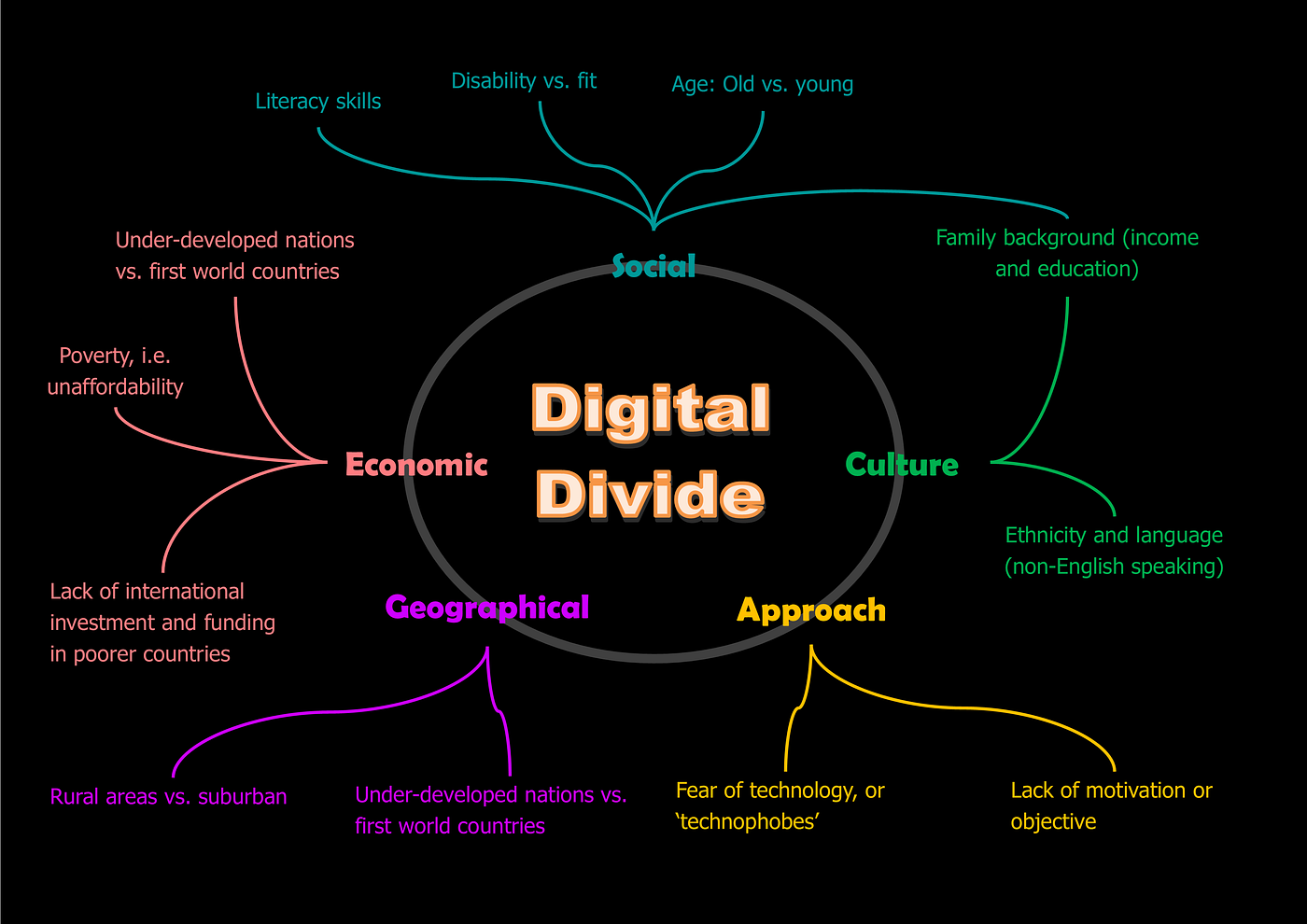

At its core, the Digital Divide is the unequal distribution of access to digital tools, internet services, and digital capabilities across different populations.
Main characteristics
The Digital Divide often includes:
- Unequal internet access
- Limited device ownership
- Gaps in digital literacy
- Affordability barriers
- Geographic disparities
- Educational and economic inequality
- Differences in quality of access, not just presence of access
These features show that the Digital Divide is a multidimensional issue rather than a single technical problem.
Why the Digital Divide Matters
The Digital Divide matters because digital access now influences participation in nearly every major area of life.
Social and economic impact
The Digital Divide can affect:
- Access to education
- Employment opportunities
- Remote work participation
- Healthcare information and services
- Financial inclusion
- Access to government resources
Broader inequality effects
It also contributes to:
- Reduced social mobility
- Limited civic participation
- Lower digital confidence
- Exclusion from innovation driven opportunities
- Greater vulnerability during crises that rely on digital communication
This is why the digital divide is widely recognized as both a technology issue and a social justice issue.
Key Dimensions of the Digital Divide
The gap between tech haves and have-nots can appear in several interconnected forms.
Access divide
Some people lack reliable internet service, modern devices, or both, making basic digital participation difficult.
Skills divide
Even when access exists, individuals may not have the skills needed to navigate digital tools effectively and safely.
Usage divide
People may use technology in very different ways depending on education, confidence, and available support. Some use it for learning, work, and productivity, while others are limited to narrow or inconsistent forms of engagement.
Quality divide
Access is not equal when one person has fast, stable broadband and multiple devices while another relies on slow mobile data and a shared phone.
Below is a concise summary of the main dimensions of the Digital Divide.
| Dimension | Main Role | Why It Matters |
|---|---|---|
| Access divide | Concerns internet and device availability | Determines basic ability to get online |
| Skills divide | Concerns digital literacy and confidence | Affects meaningful and safe technology use |
| Usage divide | Concerns how technology is used | Influences opportunity and long term outcomes |
| Quality divide | Concerns the reliability and strength of access | Shapes how effective digital participation can be |
Together, these dimensions show that closing the digital divide requires more than simply increasing the number of connected devices.
Causes of the Digital Divide
Several structural factors contribute to the persistence of the Digital Divide.
Common causes
These often include:
- Poverty and low income
- Rural or underserved infrastructure
- High service costs
- Unequal educational access
- Age related technology barriers
- Disability related accessibility gaps
- Language and cultural barriers
Why the divide persists
The Digital Divide continues because access, affordability, and capability often reinforce one another. A household without reliable income may struggle to pay for internet service, purchase updated devices, or build digital skills over time. The result is not just a missing connection. It is a chain of missed opportunities.
Addressing the Gap
Reducing the Digital Divide requires coordinated action from governments, schools, businesses, and communities.
Effective approaches
Progress often depends on:
- Expanding broadband infrastructure
- Reducing internet and device costs
- Supporting digital literacy programs
- Improving school and library access
- Designing accessible digital services
- Providing multilingual and inclusive resources
Why long term action matters
Closing the Digital Divide is not just about technology rollout. It is about ensuring people can participate meaningfully in a society where education, employment, communication, and services increasingly depend on digital access. Handing someone a device without support is a little like giving them a boat and wishing them luck in the middle of the ocean.
Conclusion
The Digital Divide is the gap between those who have the tools, access, and skills to participate in the digital world and those who do not. It affects education, employment, healthcare, public services, and long term opportunity, making it one of the defining inequality issues of the digital age. Addressing this divide requires more than expanding access. It requires building affordability, skills, infrastructure, and inclusive systems that allow all people to benefit from technology.
The key takeaway is clear. Digital Divide matters because unequal digital access creates unequal life chances in a world where opportunity increasingly depends on being connected.
Explore our “”Technology“” category for more insightful content!
Don't forget to check out our previous article: Cloud Database: Scaling Data Storage with Managed Cloud Database Solutions

