

Jakarta, teckknow.com – Istio Service refers to the use of Istio within modern cloud-native environments to manage, secure, and observe communication between microservices. In distributed systems, where services constantly exchange requests across dynamic infrastructure, managing traffic behavior and enforcing security policies can quickly become complex. Istio addresses this challenge by providing a service mesh layer that sits alongside application services and gives operators centralized control over networking behavior without requiring major changes to application code.
What makes Istio Service especially important is its ability to combine traffic management, security enforcement, and observability into one cohesive platform. Instead of embedding these concerns inside every individual service, Istio moves them into shared infrastructure. This makes it easier to control routing, enable mutual TLS, enforce policy, monitor service interactions, and support resilience at scale. In practical terms, it gives microservices a disciplined traffic system instead of letting them improvise at every intersection.
What Istio Service Is
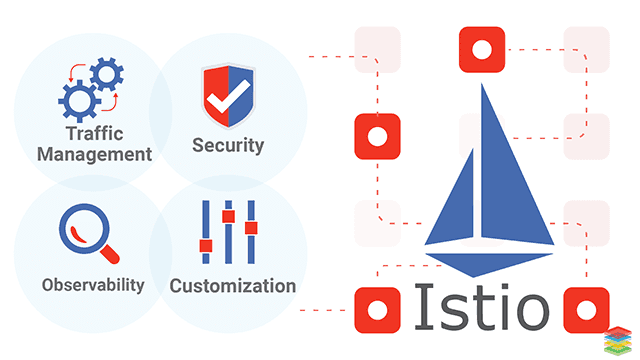

Istio Service describes the application of Istio as a service mesh for controlling service-to-service communication across microservices environments. Istio typically works by deploying sidecar proxies alongside services, allowing traffic to be intercepted, managed, and observed consistently. This architecture gives teams a powerful way to shape communication patterns, secure internal traffic, and gain visibility into application behavior.
Common features associated with Istio Service include:
- Advanced traffic routing and request control
- Mutual TLS for service-to-service encryption
- Authentication and authorization policy enforcement
- Observability through metrics, logs, and tracing
- Fault injection for testing resilience
- Retry, timeout, and circuit-breaking support
- Canary releases and traffic splitting
- Centralized management of service communication
These features explain why Istio Service is widely associated with advanced microservices operations.
Why Istio Service Matters
Istio Service matters because distributed systems need more than simple connectivity.
Traffic Control
It allows operators to define routing rules, split traffic between versions, and shape request flow with precision.
Security Enforcement
It helps secure internal service communication through encryption, identity, and policy-based access control.
Operational Visibility
It improves insight into service performance, latency, failure behavior, and request paths.
Resilience Support
It provides built-in capabilities for retries, timeouts, and controlled failure handling.
Platform Consistency
It standardizes communication behavior across services without requiring each team to implement the same logic separately.
These strengths explain why Istio Service is valuable in complex microservices environments.
Core Characteristics of Istio Service
Its value becomes clearer when its main capabilities are viewed together.
| Characteristic | Description | Why It Matters |
|---|---|---|
| Traffic management | Controls routing, splitting, retries, and failover | Improves release control and resilience |
| Security layer | Enables mutual TLS and policy enforcement | Protects internal communication |
| Sidecar proxy model | Uses proxies to handle service networking externally | Reduces code-level networking burden |
| Observability support | Exposes telemetry for tracing and monitoring | Improves operational insight |
| Policy centralization | Applies rules consistently across services | Simplifies governance and control |
Together, these characteristics show why Istio Service is both an infrastructure layer and a governance tool.
How Istio Service Is Commonly Applied
Istio Service is commonly applied in Kubernetes-based microservices platforms where teams need fine-grained traffic control and stronger internal security. It is often used for canary deployments, blue-green rollouts, policy enforcement, service identity management, and observability improvements. Organizations may also use Istio to standardize resilience features such as retries and timeouts while improving control over east-west traffic between internal services.
It is especially associated with:
- Kubernetes service mesh deployments
- Canary and progressive delivery strategies
- Zero-trust service-to-service communication
- Internal traffic encryption
- Distributed tracing and metrics collection
- Centralized policy enforcement
- Cloud-native platform operations
This wide application range shows how Istio Service supports both technical control and operational maturity.
Challenges of Deploying Istio Service
While Istio Service offers significant benefits, deployment and operation can be demanding.
Complexity
Istio introduces additional architectural layers, configuration models, and operational concepts that teams must understand.
Resource Overhead
Sidecar proxies consume CPU and memory, which can increase infrastructure costs at scale.
Operational Learning Curve
Teams need familiarity with service mesh behavior, traffic policy, security settings, and troubleshooting methods.
Configuration Management
Misconfigured routing or policy settings can create service disruption if not carefully governed.
Monitoring Requirements
Because the system becomes more powerful, it also requires disciplined observability and maintenance practices.
These trade-offs show that Istio Service is most effective when adopted with clear operational readiness.
Why It Remains Important
Istio Service remains important because modern application environments are increasingly distributed, dynamic, and security-sensitive. As organizations scale microservices across clusters and teams, service communication becomes too important to leave unmanaged. Istio provides an infrastructure-level answer to that challenge by making traffic behavior, trust, and visibility first-class operational concerns. It helps organizations move from ad hoc service communication toward a more controlled and secure model.
It continues to stand out because it provides:
- Fine-grained traffic control
- Stronger internal service security
- Better observability across service interactions
- Consistent policy enforcement
- A mature service mesh foundation for cloud-native systems
This is why Istio Service remains a major part of advanced Kubernetes and microservices platform design.
Final Thoughts
Istio Service highlights the importance of managing service-to-service communication as a core infrastructure function rather than an afterthought inside application code. Its value lies in enabling advanced traffic management, stronger security, richer observability, and more consistent operational control across distributed systems. When deployed carefully, Istio can significantly improve how microservices are routed, protected, and monitored in production.
The key takeaway is simple. Istio Service matters because it gives organizations a powerful way to control, secure, and observe microservice communication at scale.
Explore our “”Technology“” category for more insightful content!
Don't forget to check out our previous article: API Gateways: Centralizing API Management for Scalability and Security

