Jakarta, teckknow.com – Modern distributed systems rarely fail because they lack data. They fail because data arrives too fast, from too many places, and needs to move reliably between services that all behave differently under pressure. That is exactly where Apache Kafka earns its reputation. It is not just a message broker in the casual sense. It is a high-throughput event streaming platform built to move, retain, and distribute data reliably across large-scale systems.
What makes Apache Kafka so important is its role in resilience. In event-driven architectures, systems must keep functioning even when traffic spikes, consumers slow down, or individual services go down for a nap they did not schedule. Kafka helps absorb those shocks by decoupling producers and consumers, persisting event streams, and supporting scalable consumption patterns.
What Apache Kafka Is
At a practical level, Apache Kafka is a distributed event streaming platform designed for publishing, storing, and processing streams of records. It allows producers to write events to topics and consumers to read those events independently, often at different speeds and for different purposes.
This model matters because it breaks tight dependencies between services. Instead of one service calling another synchronously and hoping the timing gods are in a good mood, systems can communicate through event streams.
Core Ideas Behind Kafka
Several concepts define how Apache Kafka works:
Topics organize event streams by category or purpose
Partitions distribute topic data across brokers for scale and parallelism
Producers publish events into topics
Consumers read events from topics
Consumer groups enable scalable and coordinated consumption
Offsets track reading position within a partition
Together, these concepts allow Kafka to handle large volumes of data while staying flexible and fault-tolerant.
Why Apache Kafka Fits Event-Driven Systems
Event-driven systems depend on asynchronous communication, durable event handling, and the ability to react to change without tightly coupling every service. Apache Kafka fits that model extremely well.
Decoupling Services
Producers do not need to know which consumers exist or whether they are temporarily unavailable. They publish events, and Kafka handles persistence and delivery semantics. This reduces direct dependencies and makes systems easier to evolve.
Durable Event Storage
Unlike lightweight messaging tools that focus only on short-lived delivery, Kafka retains events for a configured period. That means consumers can replay history, recover state, or process past data after downtime.
Horizontal Scalability
By partitioning data across brokers, Apache Kafka supports high-throughput workloads and parallel consumption. This makes it suitable for log pipelines, analytics, microservices integration, and many other large-scale use cases.
Fault Tolerance
Replication helps Kafka remain available even when individual brokers fail. In resilient architectures, this is essential rather than optional.
Key Benefits of Apache Kafka at Scale
When teams adopt Apache Kafka effectively, they usually do so because it offers a strong combination of throughput, durability, and architectural flexibility.
Benefit
Why It Matters
Typical Impact
High Throughput
Handles large event volumes efficiently
Supports busy production systems and data-heavy workloads
Durability
Persists events for replay and recovery
Improves resilience and recovery options
Scalability
Expands through partitions and brokers
Helps systems grow without redesigning communication patterns
Decoupling
Separates producers from consumers
Makes services easier to maintain and evolve
Replayability
Allows consumers to reprocess events
Useful for debugging, recovery, and analytics
This combination is a major reason Apache Kafka has become a foundational tool in modern event-driven architecture.
Common Use Cases
Kafka appears in many technical environments, but certain use cases show its strengths especially clearly.
Microservices Communication
Services can publish domain events and react to them asynchronously, reducing fragile point-to-point integrations.
Log and Metrics Pipelines
Operational data can be streamed into downstream systems for observability, alerting, and analytics.
Real-Time Data Integration
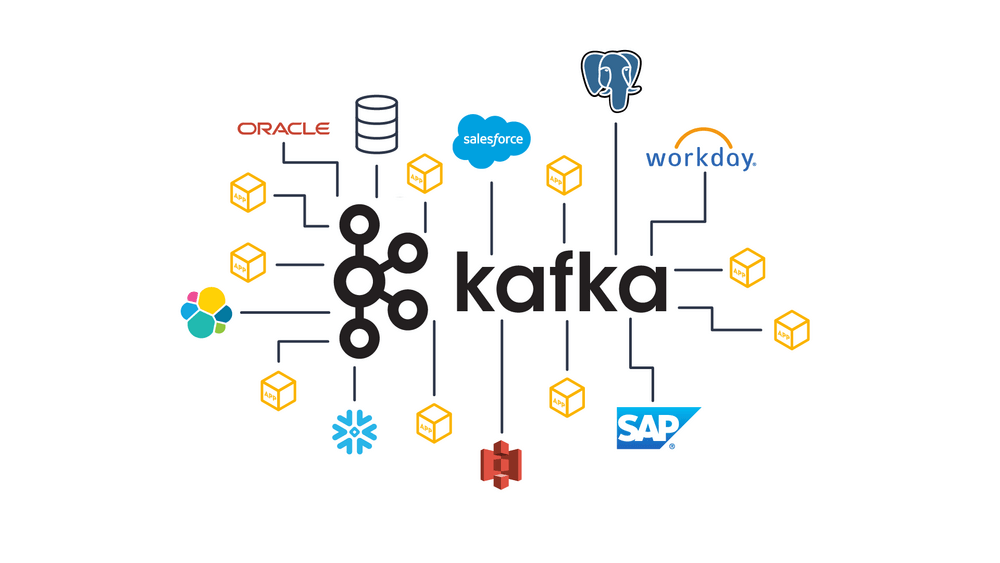
Apache Kafka can serve as a backbone for moving data between applications, databases, and processing engines.
Event Sourcing and Audit Trails
Because events are persisted and ordered within partitions, Kafka can help maintain historical records of changes over time.
Stream Processing
Kafka often works alongside processing frameworks to enable real-time transformations, aggregations, and reaction pipelines.
Design Considerations for Resilience
Using Apache Kafka does not automatically make a system resilient. Architecture still matters, and there are several design decisions that strongly affect outcomes.
Topic and Partition Strategy
Poor partition design can create bottlenecks, hot partitions, or uneven load distribution.
Replication and Availability Settings
Replication factors, acknowledgments, and leader election behavior influence durability and fault tolerance.
Consumer Group Design
Consumers need to be designed for idempotency, retry behavior, and failure handling so events are processed safely.
Monitoring and Operations
A resilient Kafka deployment requires visibility into lag, broker health, partition balance, throughput, storage, and failure conditions.
Schema Management
Event-driven systems become brittle when message formats change carelessly. Strong schema governance helps preserve compatibility.
Common Challenges
For all its strengths, Apache Kafka is not magic infrastructure sprinkled over architectural problems.
Some frequent challenges include:
Operational complexity in large clusters
Managing partition growth carefully
Avoiding duplicate or out-of-order processing issues
Designing consumers that handle retries safely
Governing schemas and topic ownership across teams
I think this is where teams sometimes get ambitious too quickly. Kafka scales beautifully, but it also rewards discipline and punishes casual design with professional efficiency.
Final Thoughts
Apache Kafka has become central to large-scale event-driven systems because it solves several hard problems at once: reliable event transport, durable storage, decoupled communication, and scalable consumption. In systems that need to remain responsive and resilient under pressure, those capabilities are enormously valuable.
The key takeaway is that Apache Kafka is most powerful when treated as a core architectural layer rather than a simple queue. With thoughtful partitioning, strong operational practices, careful consumer design, and clear schema governance, it becomes a durable backbone for resilient systems built to handle growth, failure, and constant change.
Explore our “Technology” category for more insightful content!