

JAKARTA, teckknow.com – Fuel Cells: Generating Electricity from Chemical Reactions has always just sounded—let’s be real—a bit sci-fi to me. I first learned about fuel cells in a Technology magazine, but thought, “Yeah, that’s just for scientists, not us regular folks.” Fast forward a few years and here I am, trying to light up my small garage workshop with a tiny hydrogen fuel cell!
When I first encountered fuel cells a decade ago, I was struck by their elegant simplicity: convert chemical energy directly into electricity without combustion. Yet as I’ve delved deeper—experimenting with small stacks in a university lab and later observing industrial prototypes—I’ve come to appreciate the subtle challenges and immense promise hidden within those neat electrochemical assemblies.
A Conversation with Hydrogen
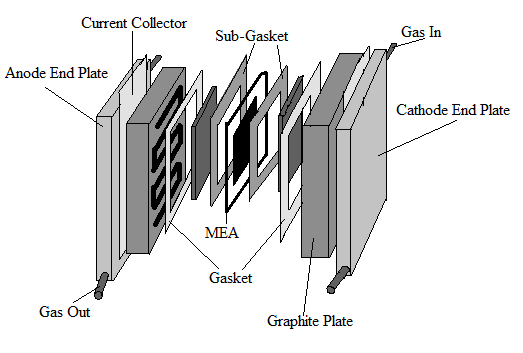

At its heart, a fuel cell is an electrochemical device. You feed it a fuel—most commonly hydrogen—and an oxidizer, usually oxygen from air. At the anode, hydrogen molecules break apart into electrons and protons. The electrons then flow through the external circuit to do work, while the protons pass through the electrolyte to the cathode, where they merge with electrons and oxygen to form water. No moving parts. No flames. Just a steady, silent generation of electricity.
Yet discussions around fuel cells often spiral into technical minutiae—membrane conductivity, catalyst degradation, water management. While those are vital considerations, I’ve found it more illuminating to ponder the broader implications:
- What if we paired fuel cells with renewable hydrogen from solar-driven electrolysis?
- How might communities outside the power grid leverage modular fuel-cell generators?
- Can fuel cells reshape heavy-duty transport the way batteries have begun to transform passenger vehicles?
The Diversity of Designs
Beyond the proton‐exchange membrane fuel cell (PEMFC) that dominates automotive research, there’s a spectrum of chemistries:
- Solid oxide fuel cells (SOFCs) operate at high temperatures, tolerating a broader range of fuels—natural gas reformed in situ, even biogas—yet demand bizarre ceramics and slow startup times.
- Alkaline fuel cells (AFCs) boast high efficiency but require scrupulously dry CO₂-free inputs, a hurdle for real-world air.
- Direct methanol fuel cells (DMFCs) sidestep hydrogen storage by using liquid methanol, trading off some efficiency for convenience.
Each design sparks a different conversation about where and how fuel cells might fit. I’ve seen SOFC micro-CHP units quietly powering homes in Europe—glass panels glowing faint amber in basements—while PEMFC research carts zip around campus corridors, drawing curious looks from passersby.
Applications: From Niche to Mainstream?
Fuel cells today occupy a curious middle ground. They’re no longer confined to space missions and submarines, but they haven’t yet become ubiquitous. In transportation, we’ve seen buses rolling on hydrogen across several continents. Forklift fleets in distribution centers often adopt PEMFCs because rapid refueling beats battery charging in a high-demand environment. Yet price per kilowatt and infrastructure hurdles keep fuel cells from displacing lithium-ion batteries in mainstream cars.
In off-grid power, I’ve witnessed communities in remote Alaska test SOFC systems integrated with wind turbines. When the wind dies, the fuel cell fills the gap, using propane or locally produced bio-methane. In urban centers, fleets of fuel-cell scooters and electric bikes are trickling into rental networks, hinting at a future where chemical and electrical hybrids coexist.
The Tug-of-War: Cost, Durability, and Infrastructure
If you ask any fuel-cell engineer about the technology’s Achilles’ heel, the answer usually oscillates between cost and durability. Platinum catalysts remain expensive; researchers chase alternative catalysts but struggle to match platinum’s activity. Membrane lifetimes depend on operational purity and temperature control—a few parts per million of contaminant can degrade performance.
Infrastructure presents its own conundrum. Building a hydrogen network requires careful coordination among gas producers, storage operators, and end-users. Each fueling station resembles a miniature refinery and must adhere to strict safety standards. As a result, hydrogen corridors emerge in pockets—California’s network, parts of Germany and Japan—while vast regions remain unserved.
This chicken-and-egg dilemma—fuel cells need stations, stations need vehicles—has slowed deployment. Yet I’ve noticed another dynamic at play: cross-sector collaboration. Ammonia producers eye co-location of ammonia-to-hydrogen cracking units at ports, leveraging existing pipelines. Steel mills explore on-site hydrogen generation for both metallurgical processes and fuel-cell power. These integrated models, once fringe concepts, are gaining traction at energy conferences and in pilot grants.
Looking Forward: Synergies and System Thinking
Rather than viewing fuel cells in isolation, I’ve come to see them best within hybrid energy systems. Imagine a manufacturing plant where solar panels feed electrolyzers by day, storing hydrogen in tanks. At night or during peak demand, that hydrogen feeds SOFCs to provide baseload power—while waste heat warms buildings or drives absorption chillers. Or consider telecom towers in Africa: instead of relying on diesel generators, operators could deploy PEMFC-battery hybrids, using solar-derived hydrogen for backup.
Such system-level thinking resonates with me because it underscores the unique strengths of fuel cells—scalability, fast refueling, modularity—and mitigates their weaknesses through complementary technologies. In workshops and panels, I’ve found that experts from renewables, industrial gas, and energy storage can converge around these hybrid scenarios, translating technical potential into business cases.
A Continuing Dialogue
Fuel cells have matured far beyond laboratory curiosities, yet they still provoke lively debate among engineers, policymakers, and entrepreneurs. Each stakeholder brings a different lens:
- Policymakers ask how subsidies and regulations can level the playing field.
- Investors weigh the long-term prospects against rapidly evolving battery technologies.
- Environmental advocates question the upstream carbon footprint of hydrogen production.
My own view is that fuel cells, rather than supplanting batteries or combustion engines outright, will find niches where their particular advantages shine—heavy transport, distributed generation, and integration with clean-hydrogen pathways. The ongoing conversation, driven by HOKIJITU pilot projects and interdisciplinary research, will determine how swiftly and broadly those niches expand.
Fuel cells remind me that energy transitions unfold not through a single “winner,” but via a mosaic of solutions, each addressing specific needs. By keeping the focus on systems thinking—matching electrochemical characteristics to real-world demands—we can demystify Fuel Cells and chart realistic pathways toward a low-carbon future.
Explore our “Technology” category for more insightful content!
Don't forget to check out our previous article: Search Intent: Understanding User Goals

