

JAKARTA, teckknow.com – Speech Recognition: Converting Spoken Words into Digital Text isn’t just some tech hype, it’s honestly saved my sanity more times than I care to admit. First time I tried using speech recognition was while writing long emails—phew, what a mess! My accent confused the app so much, half my message turned into gibberish. But that’s the thing, right? You gotta fine-tune and adapt both the tech and yourself.
In the early days of computing, the idea of talking to a machine and having it understand you was a novelty at best and an exercise in extreme frustration at worst. I remember trying early “voice-to-text” software that required me to speak like a robot, pausing after every word, only for the screen to display a jumble of nonsense. Fast forward to today, and Speech Recognition has become so seamless that we often forget the complex engineering happening behind the scenes. My journey from those early frustrations to today’s “fluent tech” has mirrored the incredible evolution of this technology.
What is Speech Recognition?
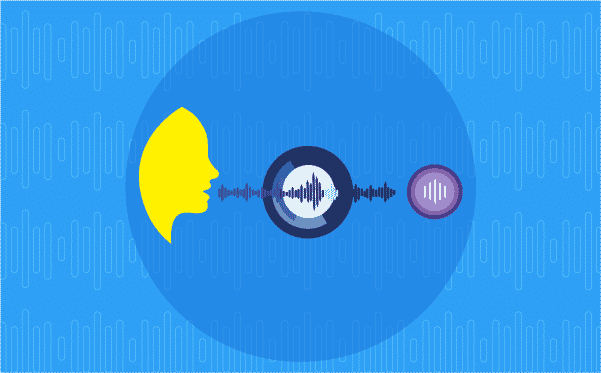

Speech Recognition, also known as Automatic Speech Recognition (ASR) or computer speech-to-text, is a capability which enables a program to process human speech into a written format. It involves several layers of technology:
- Acoustic Modeling: Identifying the relationship between audio signals and the basic building blocks of speech (phonemes).
- Language Modeling: Using context and probability to predict which words are most likely to follow one another.
- Natural Language Processing (NLP): Understanding the intent and meaning behind the words to ensure the transcription is accurate and contextually relevant.
The Turning Point: From “Robot Speak” to Natural Dialogue
The real shift in my experience with Speech Recognition came with the advent of Deep Learning and Neural Networks. Suddenly, the software didn’t just listen to sounds; it learned patterns.
I distinctly remember the first time I dictated an entire three-page article using only my voice. I didn’t have to over-enunciate or correct every second sentence. The system understood my cadence, my slight accent, and even where to place the punctuation based on the tone of my voice. This was the moment I realized that Speech Recognition had moved from a “gimmick” to a primary productivity tool.
Why Speech Recognition is a Game-Changer
The widespread adoption of Speech Recognition has brought about several transformative benefits:
- Accessibility: For individuals with motor impairments or visual disabilities, voice-to-text is not just a convenience—it is an essential bridge to the digital world.
- Efficiency: Most people can speak significantly faster than they can type. Dictating emails, notes, or even code can save hours of manual labor every week.
- Hands-Free Safety: From GPS navigation to controlling smart home devices, Speech Recognition allows us to interact with technology without taking our eyes off the road or our hands off the task at hand.
- Instant Documentation: In fields like medicine and law, professionals can use real-time transcription to document patient visits or legal proceedings, reducing the administrative burden.
The Challenges: Accents, Noise, and Privacy
Despite its brilliance, Speech Recognition still faces hurdles that I encounter in my daily use:
- Ambient Noise: Trying to use voice commands in a crowded coffee shop is still a challenge for many algorithms.
- Accents and Dialects: While improving, some systems still struggle with regional accents or non-native speakers, leading to a “transcription bias.”
- Privacy Concerns: Because most high-quality Speech Recognition is processed in the cloud, many users are rightfully concerned about where their voice data is stored and who has access to it.
The Future: Emotional Intelligence in Voice
We are moving toward a future where Speech Recognition won’t just hear what we say, but how we say it. Future systems will likely be able to detect emotion, fatigue, or urgency in a user’s voice, allowing for more empathetic and responsive AI interactions. We are transitioning from “speech-to-text” to “speech-to-understanding.”
Conclusion
My journey with Speech Recognition has taught me that technology is at its best when it adapts to us, rather than forcing us to adapt to it. What started as a clunky, error-prone experiment has blossomed into a fluent, indispensable part of my digital life. As the technology continues to refine its “ear,” the barrier between human thought and digital action will continue to vanish, one spoken word at a time.
Explore our “Technology” category for more insightful content!
Don't forget to check out our previous article: Keyword Ranking: Strategies to Improve Search Visibility

