
JAKARTA, teckknow.com – Google Algorithm: Understanding How Search Works and Ranks Content sounds intimidating, right? Trust me, I’ve been there—pulling my hair out because my blog posts were stuck on the tenth page. But honestly, once you get how the Google Algorithm does its thing, it feels way less mysterious—and even kinda fun.
Every day, billions of searches traverse Google’s infrastructure to fetch the most relevant answers for users. Behind the scenes, the Google Algorithm orchestrates a complex dance of crawling, indexing, and ranking to serve results in fractions of a second. Whether you’re a content creator, marketer, or developer, understanding how this algorithm works is essential to optimize your presence on the world’s leading search engine. In this article, we’ll demystify Google’s search process, unpack key ranking factors, review major updates, and share pro tips for creating content that rises to the top.
1. The Three Pillars: Crawl, Index, Rank

- Crawling
- Bots (Googlebot) systematically browse the web, following link trails to discover pages.
- Robots.txt and sitemap.xml guide bots on what to crawl and what to ignore.
- Indexing
- Discovered pages are parsed for content, metadata, and structured data.
- Google stores these signals in its index—a massive database of trillions of pages.
- Ranking
- When a user searches, Google retrieves matching pages from its index and orders them by relevance and quality.
- Over 200 ranking signals feed into the final search results.
2. Major Algorithm Updates You Should Know
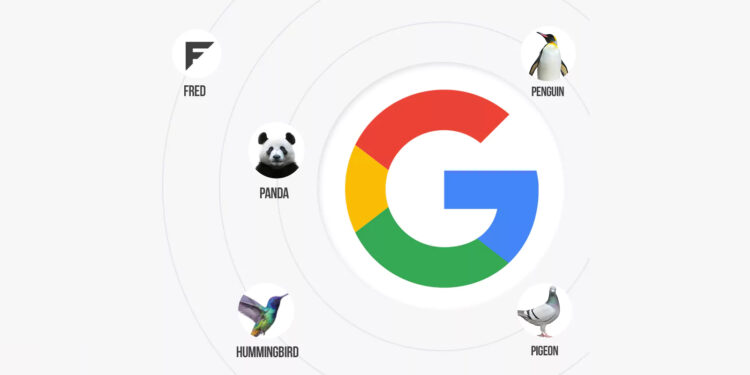
- Panda (2011)
- Penalized thin, low-quality, or duplicate content.
- Rewarded sites with original, in-depth information.
- Penguin (2012)
- Targeted manipulative link-building tactics (spammy backlinks).
- Emphasized natural, high-authority link profiles.
- Hummingbird (2013)
- Introduced semantic search capabilities to interpret search intent.
- Improved handling of conversational and long-tail queries.
- RankBrain (2015)
- Machine-learning system that interprets ambiguous queries and refines ranking.
- Dynamically adjusts to user behavior and click-through patterns.
- BERT (2019)
- Bidirectional Encoder Representations from Transformers enhanced understanding of context and nuances in language.
- Improved match between complex queries and relevant passages.
- Page Experience Updates (2021+)
- Core Web Vitals (Largest Contentful Paint, First Input Delay, Cumulative Layout Shift) became ranking signals.
- Mobile-first indexing and HTTPS adoption are now critical.
3. Top Ranking Factors in 2025
- Content Quality & E-E-A-T
Experience, Expertise, Authoritativeness, Trustworthiness. - Backlink Profile
Quality, relevance, and diversity of incoming links. - User Engagement Metrics
Click-through rate (CTR), dwell time, and pogo-sticking (quickly returning to search). - Core Web Vitals
Page speed, interactivity, and visual stability. - Mobile-First Indexing
Google predominantly uses the mobile version of content for indexing and ranking. - Structured Data
Schema markup helps Google understand content context and can power rich snippets.
4. Best Practices for Optimizing for the Google Algorithm
- Conduct Thorough Keyword Research
- Use tools like Google Keyword Planner, Ahrefs, or Semrush.
- Focus on user intent: informational, navigational, transactional.
- Create High-Value, Original Content
- Answer user questions comprehensively.
- Include up-to-date data, visuals, and examples.
- Optimize On-Page Elements
- Title tags and meta descriptions should be concise, descriptive, and include the focus keyword (“Google Algorithm”).
- Use header tags (H1, H2, H3) to structure content logically.
- Incorporate the focus keyword naturally in the first 100 words and subheadings.
- Improve Page Experience
- Compress images, minify CSS/JS, and leverage browser caching.
- Ensure mobile responsiveness and fast load times.
- Maintain a stable layout to minimize Cumulative Layout Shift.
- Build a Healthy Backlink Profile
- Earn links from reputable, relevant sites through guest posts, case studies, and partnerships.
- Monitor for toxic or spammy links and disavow if necessary.
- Leverage Structured Data
- Implement Schema.org markup for articles, FAQs, breadcrumbs, and product data.
- Validate with Google’s Rich Results Test.
- Monitor and Iterate
- Track rankings, traffic, and engagement in Google Search Console and Analytics.
- Analyze performance after each update and adjust your strategy.
5. Real-World Example: Boosting a Tech Blog’s Visibility
- Challenge: A tech blog covering software tutorials was buried on page two despite well-written articles.
- Action Plan:
• Performed an SEO audit to identify thin pages.
• Consolidated overlapping content into comprehensive “pillar” posts on each topic.
• Enhanced internal linking to signal content hierarchy.
• Improved page speed and mobile usability.
• Added FAQ schema and code snippet structured data. - Outcome: Within three months, organic traffic increased by 60%, with 75% of targeted articles moving to page one.
Conclusion
Mastering the Google Algorithm is an ongoing process of learning, testing, and refining. By understanding how Google crawls, indexes, and ranks, and by aligning your content strategy with its major updates and ranking factors, you’ll position your site to win visibility and drive meaningful engagement. Keep user experience at the center, stay current with algorithm changes, and iterate based on data—and you’ll be ranking like a pro in 2025 and beyond.
Boost Your Proficiency: Learn from Our Expertise on Technology
Don’t Miss Our Latest Article on Content Strategy: Planning for Effective Communication!

