

Jakarta, teckknow.com – API Gateways are a critical layer in modern software architecture, acting as the centralized entry point through which client requests are routed to backend services. In systems built around microservices, distributed applications, mobile clients, partner integrations, and public APIs, an API Gateway helps organize traffic, enforce policies, and simplify communication between consumers and services. Rather than allowing every client to interact directly with each internal service, organizations place API Gateways in front of those services to manage access in a more consistent and controlled way.
What makes API Gateways especially important is their role in balancing operational complexity with security and performance. They can handle authentication, rate limiting, request routing, protocol translation, caching, logging, monitoring, and policy enforcement, all in one centralized layer. This not only improves manageability but also reduces duplication across backend services. In practice, the gateway becomes the front desk, security checkpoint, traffic controller, and occasionally the diplomatic mediator of an API ecosystem.
What API Gateways Are
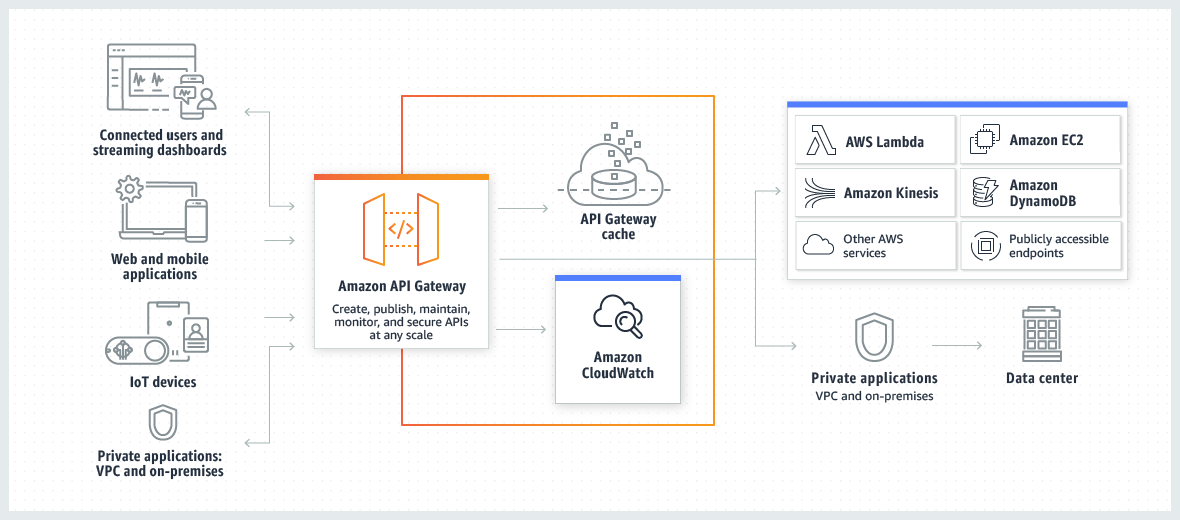

API Gateways are software components or managed services that sit between API clients and backend ZONATUAN systems, receiving incoming requests and directing them to the appropriate internal service or endpoint. They serve as an abstraction layer that hides backend complexity from consumers while applying governance, transformation, and protection rules before traffic reaches the underlying architecture.
Common capabilities associated with API Gateways include:
- Request routing and service discovery
- Authentication and authorization enforcement
- Rate limiting and throttling
- Load balancing and traffic shaping
- Caching and response optimization
- Logging, monitoring, and analytics
- Protocol translation such as REST to gRPC or SOAP integration
- API versioning and policy control
These capabilities explain why API Gateways are central to modern API operations.
Why API Gateways Matter
API Gateways matter because they improve consistency, control, and resilience in API-driven systems.
Centralized Security
They provide a unified place to enforce authentication, authorization, and access rules.
Simplified Client Interaction
Clients can access multiple backend services through one managed interface.
Operational Scalability
Gateways help manage increasing traffic and service complexity in growing systems.
Policy Enforcement
Teams can apply rate limits, quotas, transformations, and validation rules consistently.
Observability
They improve monitoring, analytics, and troubleshooting across API traffic flows.
These strengths explain why API Gateways are a foundational part of scalable digital platforms.
Core Characteristics of API Gateways
Their architectural value becomes clearer when their defining traits are viewed together.
| Characteristic | Description | Why It Matters |
|---|---|---|
| Central entry point | Receives and manages inbound API traffic | Simplifies architecture exposure |
| Policy layer | Applies security, quota, and routing rules | Improves consistency and governance |
| Traffic control | Handles throttling, balancing, and shaping | Supports performance and stability |
| Abstraction function | Hides backend service complexity from clients | Reduces coupling |
| Observability support | Provides logs, metrics, and tracing data | Enhances operational insight |
Together, these characteristics show why API Gateways are both practical and strategically important.
How API Gateways Are Commonly Used
API Gateways are commonly used in microservices architectures, cloud-native applications, enterprise integration platforms, SaaS ecosystems, mobile backends, and public developer platforms. For example, a mobile app may send all requests through a gateway that authenticates the user, routes traffic to multiple internal services, aggregates responses, and applies rate limits. In enterprise settings, API Gateways often serve as a control plane for exposing internal services securely to partners, departments, or external developers.
They are especially associated with:
- Microservices architectures
- Cloud-native application delivery
- API security management
- Developer platform governance
- External partner integrations
- Traffic shaping and throttling
- Centralized authentication workflows
This range of use cases shows how broadly API Gateways support modern system design.
Why They Remain Important
API Gateways remain important because application environments continue to grow more distributed, interconnected, and security-sensitive. As organizations expose more services across mobile, web, internal, and partner-facing channels, the need for a centralized management layer becomes more urgent. Without a gateway, teams often recreate the same controls repeatedly across services, increasing inconsistency and operational risk. With one, they gain a more coherent way to protect, observe, and scale API access. The software may still be complicated, but at least the chaos gets a receptionist.
It continues to stand out because API Gateways provide:
- Centralized API control
- Stronger security enforcement
- Better scalability management
- Cleaner client-to-service interaction
- Improved visibility across traffic and performance
This is why API Gateways continue to be essential in modern software infrastructure.
Final Thoughts
API Gateways highlight the importance of having a controlled and intelligent entry point in API-centric systems. Their value lies in simplifying access, enforcing policies, improving observability, and supporting the scalability of increasingly complex backend environments. Whether used in microservices, enterprise integrations, or public API platforms, API Gateways remain a key architectural component
Explore our “”Technology“” category for more insightful content
Don't forget to check out our previous article: Neural Networks: Mimicking the Human Brain for AI

